
Full-stack software engineer, Toronto
Anna Chester
I build web, mobile, and backend systems that real people use, and I like owning them from the first commit onward. Day to day that means ZEVA, an EV product for drivers and fleets, and HAIL Admin, the platform for businesses that want to rent out their fleets. Outside of that I take on client work of my own. I also taught computer science at U of T for four years, and from 2024 I did it alongside ZEVA while finishing my degree.
Why I build
The best part of being a TA was watching a stuck student find the answer their own way. I'd ask the question that pointed at the problem instead of fixing it for them.
Building software is the same work on a bigger scale. Every client arrives with a different problem, and I get to take it from the first conversation to something people use every day. Banu Beauty's founder runs her store without needing me, and Prime Accounts' clients file their records online.
What I build
At ZEVA I work across Django, PostgreSQL, Angular, and Flutter. HAIL Admin, the platform car-share fleet operators run their day on, is mine across every tier: I designed and wrote its Django backend, built its Angular console from an empty repository, and built its mobile admin app.
Outside of ZEVA, I'm the lead engineer and designer for two businesses. I designed, built, launched, and later redesigned Banu Beauty's store, and I still look after it and advise its founder. For Prime Accounts Inc, an accounting firm with a website from the early 2000s, I rebuilt its broken sign-in, redesigned the site, built client accounts and invoicing on top, and I'm still the firm's developer today.
Building on the data
ZEVA and HAIL Admin run on data: live vehicle information from the car makers, payments, and everything operators and drivers do in the apps. My part is turning it into something people can act on, so the web console and the mobile app always show the same, current picture.
HAIL Admin tells an operator when a battery runs low, a return is late, or a car moves with no reservation, sends it to the right person's phone, and clears it once the problem is gone. Drivers schedule charging around their own time zone, and the product analytics I built show the team how people use the product.
How I build
I put the decisions on the server. Angular, Flutter, and Next.js screens show state and ask for changes. Django, PHP, and PostgreSQL authorise, own every write, and hold the only copy of the truth.
Payments, rewards, form checks, and sign-in all sit on the server side of that line. A client can be stale, offline, or tampered with, so I never trust it to decide anything.
Why the trees
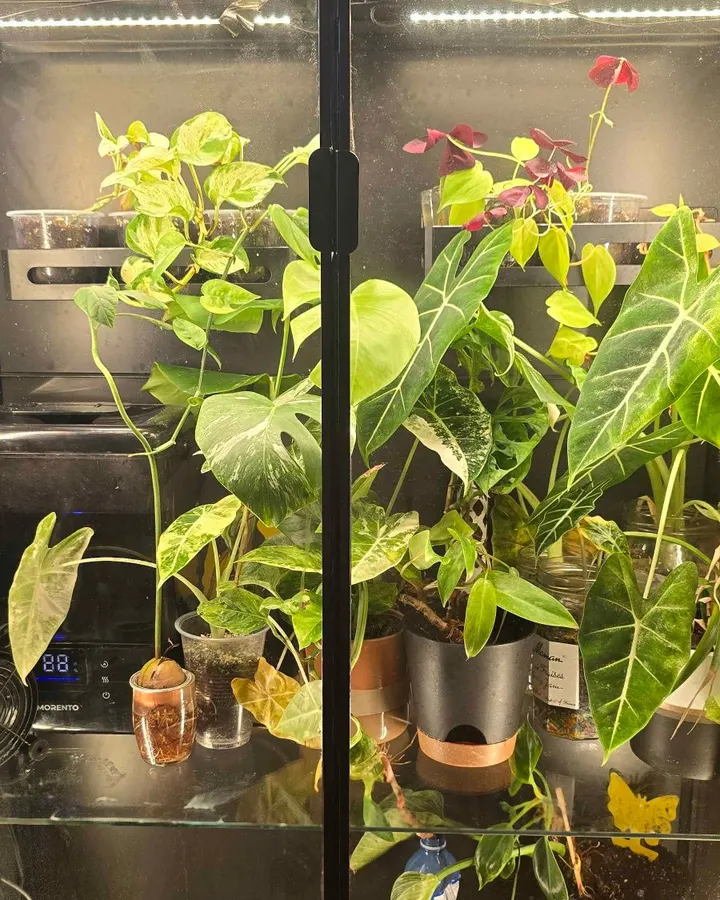
As you may have noticed, the map above shows central Toronto drawn only from its street trees. I keep a lot of plants, but what made me want to build it is that the City of Toronto publishes a record of every street tree it looks after. Information like that is public, and I wanted to use it to teach people about their local environment.
On my home page you can tap or hover any of them and see what it is, whether it's native to Ontario, and roughly how long it has been growing on that spot.
Experience and education
Jan 2024 – present
ZEVA
Senior Full-Stack Developer, promoted twice from co-op
I joined as a co-op from January to August 2024, then stayed on as a part-time software engineer while I studied and taught at U of T. I've been full time since January 2026, and taught my last term alongside it.
I built HAIL Admin across every tier: its Django backend, its Angular console from an empty repository, and its Flutter admin app. Fleet operators run vehicles, reservations, pricing, and alerts on it in production, from the web console and from their phones. On-device verification with Flutter ML Kit was part of that work too. Before that I built ZEVA's fleet onboarding and per-vehicle access control, a cross-platform referral engine, charging controls with timezone-aware scheduling, product analytics, and OEM account linking.
What I owned on HAIL Admin
- Vehicles, reservations, pricing, and geofences
- Alerts that reach the right operator on their phone
- Remote vehicle actions, and taking a car out of service
- The Angular console, from its first commit
- The Flutter admin app, including a phone key
Feb – May 2023
DBRS Morningstar
Software Engineer, Co-op
I built across Angular, Node.js, .NET, and MySQL in an agile team, and led the SonarQube rollout through Jenkins and TeamCity so analysis ran on every commit and pull request.
2022 – Apr 2026
University of Toronto
Teaching Assistant in CSCA08, CSCA48, CSCB07, and CSCC01
I was a teaching assistant in four computer science courses and supported more than 1,000 students, from first-year Python to third-year team projects. From 2024 I taught alongside my job at ZEVA, the last term while working there full time.
What I did
- Reference builds
- For CSCB07 and CSCC01 I built full proof-of-concept prototypes of the group project. They became the baseline for marking every team's submission.
- Weekly review
- Every week I reviewed assignments on core software engineering, API design, and software architecture.
- Full-stack grading
- In-depth grading of complete websites students built, from the backend to the frontend to the deployment.
- Tutorials
- A weekly tutorial for 30+ students in each course, live coding through the lecture's concepts and taking them further.
- Office hours
- Office hours and the course discussion board, with each answer shaped to how that student learns.
The four courses
From a student's first program to their first team project.
Course Title What it covers CSCA08 Introduction to Computer Science I First year. A student's first programs, in Python. CSCA48 Introduction to Computer Science II First year. Data structures, recursion, testing, and efficiency. CSCB07 Software Design Second year. Java, version control, unit testing, and design patterns. I built the reference prototype for its group project. CSCC01 Introduction to Software Engineering Third year. Agile team projects, from requirements to architecture and testing. I built the reference prototype for its group project. What it made me better at
- Reading code
- Hundreds of projects I didn't write, in Java, Python, C, and TypeScript, read closely enough to find what was actually wrong.
- Reviewing
- Turning what I found into feedback a student could act on, which is most of a good code review.
- Explaining
- Taking a system apart for someone who is stuck, without taking over their keyboard.
- Shipping
- Getting a student team from working on one laptop to tested and deployed.
2026
University of Toronto
Honours BSc, Computer Science Specialist
I finished the degree while teaching in the department and working at ZEVA.
Tools I use
- Languages
- TypeScript, Python, PHP, Dart, and SQL
- Backend
- Django, Django REST Framework, Node.js, and PostgreSQL
- Web
- Angular, Next.js, and React
- Mobile
- Flutter, Google ML Kit, and Bluetooth LE
- Services
- Stripe, Firebase Cloud Messaging, Microsoft Graph, and OEM vehicle APIs
- Delivery
- GitHub Actions, Vercel, Jenkins, TeamCity, and SonarQube
Elsewhere
Any other account under my name belongs to someone else.
Have somethingthat needs building?
If you have an idea you want built, or a project you'd like to talk through, I'd love to hear about it. I'm based in Toronto, and distance isn't a problem.